
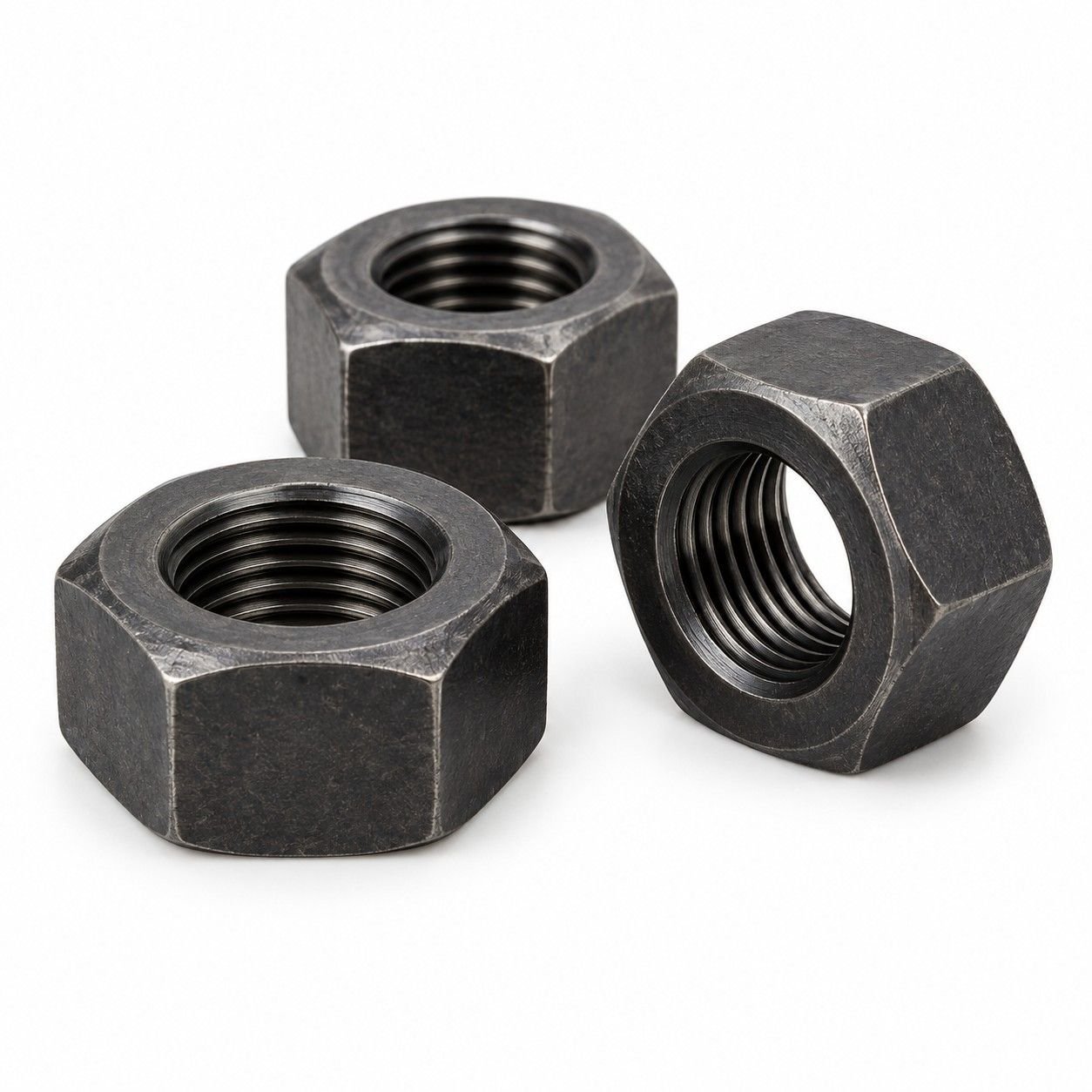
In high-pressure, high-temperature service, a bolted joint is only as reliable as its weakest component. That weak point is often the nut. If it can't carry the load, you lose bolt preload, and an unevenly compressed gasket will leak. Then comes unplanned downtime, rework, and a long day for your maintenance crew. That's why choosing the right 2H Nuts matters.
The fix is simple: use a nut made for the job. 2H Nuts built to ASTM A194 Grade 2H are designed for heavily loaded joints, where reliability matters more than saving a few cents per piece.
Overview of 2H Nuts
2H Nuts, built to ASTM A194 Grade 2H, are heavy hex nuts made from heat-treated carbon steel. They're designed for high-strength bolting in pressure- and temperature-critical service, so you'll find them on pressure vessels, piping systems, flanges, and valves.
They're most often paired with ASTM A193 Grade B7 stud bolts and bolts. This match is a standard industry choice. The nut and the stud work together to hold the clamping load you designed for.
As a 2H Nuts Supplier in Houston, we supply them in a larger range of sizes and thread configurations. Need extra corrosion protection? We offer several coatings and platings.
Key Features of 2H Nuts
Manufactured to ASTM A194 Grade 2H:
Built to a recognized standard, ensuring consistent quality and performance batch after batch.
Heat-treated carbon steel:
Heat treatment gives 2H Nuts the strength they need to carry heavy bolt loads reliably.
Heavy hex design:
A thicker, wider body spreads load across the threads and resists stripping under tension.
High-pressure, high-temperature service:
Helps hold preload in demanding conditions where lesser nuts can loosen or fall short.
Multiple sizes and thread configurations:
Pick the size and thread that match your studs, bolts, and flanges.
Compatible with ASTM A193 Grade B7:
Pairs naturally with B7 studs and bolts, a proven bolting combination for industrial flange work.
Protective coatings available:
Zinc, PTFE, hot-dip galvanized, Xylan, or custom finishes for your environment.
Standards and Capability
| S. No | Item | Details |
|---|---|---|
| 01 | Specification | ASTM A194 Grade 2H |
| 02 | Material | Heat-treated carbon steel |
| 03 | Style | Heavy hex |
| 04 | Typical mating fasteners | ASTM A193 Grade B7 studs and bolts |
| 05 | Sizes | Multiple sizes available |
| 06 | Threads | Various thread configurations |
| 07 | Custom work | Made to your drawings and specifications |
| 08 | Documentation | Inspection, testing, and material test reports available as required |
Coating and Surface Options
| S. No | Finish | What it's good for |
|---|---|---|
| 01 | Plain/uncoated | Controlled or indoor environments, or when you'll apply your own protection |
| 02 | Zinc coated | Basic corrosion resistance at a practical cost |
| 03 | PTFE coated | Corrosion resistance with lower friction for smoother tightening |
| 04 | Hot-dip galvanized | Heavier protection for outdoor and exposed service |
| 05 | Xylan coated | Corrosion resistance and consistent torque performance |
| 06 | Customer-specified | Any finish your project calls for |
Applications
Pressure vessels:
Secures heads, manways, and nozzle flanges, where steady bolt load keeps contents sealed through internal pressure and repeated heat cycles.
Piping systems and flanged connections:
Keeps gaskets evenly compressed across flange faces, so joints stay tight through pressure surges and temperature swings in process lines.
Valves and pressure-retaining equipment:
Holds bonnets and body joints firmly, helping valves stay leak-free and safe to operate under load.
Refineries and petrochemical plants:
Handle the heat, pressure, and long run times of refining and petrochemical units, where unplanned shutdowns cost real money.
Power generation facilities:
Support boilers, steam lines, and turbine connections that run hot for long periods and need joints you can count on.
Oil and gas installations:
Used on wellhead, pipeline, and processing equipment, where high pressure and harsh conditions leave little room for bolting failure.
Industrial process equipment:
Fits pumps, heat exchangers, and reactors that need dependable, repeatable clamping force during daily operation and after routine maintenance work.
2H Nuts: Engineers choose this when they need dependable bolt preload, consistent gasket compression, and lasting joint integrity. The heat-treated construction helps the nut keep performing through pressure swings and temperature changes.
Why Choose Clarion as Your 2H Nuts Supplier
Clarion Industrial is a manufacturer and Industrial Fasteners Supplier in Houston with more than 25 years of experience producing studs and precision-engineered components. As an ASTM A194 Grade 2H Nuts Supplier in Houston, Clarion manufactures heavy hex nuts to your drawings and specifications, with inspection, testing, and documentation available as required.
Request a Quote for 2H Nuts
Looking for a 2H Nuts Supplier in Texas | Houston?
Clarion 2H nuts are made to your specifications. Send us your requirements, and please include:
- Your drawing or sketch
- Nut size and thread type
- Material grade: ASTM A194 Grade 2H
- Coating requirement
- Mating stud or bolt grade (for example, ASTM A193 B7)
- Operating temperature and pressure conditions
- Quantity and delivery timeline
- Required material test reports and inspection documentation
Don't have the full drawing yet?
Send your requirements. We will help you find the right fit!
FAQs
How are 2H Nuts different from a regular hex nut?
A heavy hex nut is thicker and larger across the flats. That extra material helps it carry higher loads and resist thread stripping in high-strength bolting.
What's the difference between 2H Nuts and Grade 2HM nuts?
Both are heavy hex nuts, but 2HM has a lower hardness range. It's often specified for sour service, where hardness limits matter. Check your project specification before choosing.
Which thread series do 2H Nuts use?
It depends on the size and your design. Smaller sizes commonly use coarse threads, while larger sizes often use an 8-thread series. Tell us your stud or bolt thread, and we'll match it.
Can I reuse 2H Nuts after removing them?
For critical, high-pressure joints, most plants prefer fresh nuts. Reuse depends on the nut's condition and your site's maintenance procedures, so follow those rules.
Will coatings or lubricant change the tightening torque on 2H Nuts?
Yes. Friction affects how tightly a bolt gets tightened when you apply torque. PTFE and Xylan coatings, as well as thread lubricants, lower friction, so your torque values should account for the finish you choose.